


Create intelligent solutions for a data-driven world
Artificial intelligence is transforming the way organisations solve problems, make decisions and deliver services. From healthcare and finance to cybersecurity and smart technologies, demand for professionals with AI and machine learning expertise continues to grow.
The Master of Artificial Intelligence and Machine Learning (MAIML) combines technical knowledge with practical experience in designing, developing and deploying AI solutions. You will learn how to build intelligent systems, work with the latest AI tools and frameworks, and apply your skills to real-world challenges through industry-based projects.
Develop expertise in machine learning, deep learning, natural language processing, intelligent robotics and secure AI systems, and graduate ready to contribute to the next generation of intelligent technologies.
DURATION
2 Years (4 Trimesters)Full-Time or Equivalent Part-Time
INTAKES
March,July,
November
LOCATION
Sydney, MelbourneAQF LEVEL
Level 9| Duration 2 Years (4 Trimesters) Full-Time or Equivalent Part-Time | |
| Intakes March, July, November | |
| Location Sydney, Melbourne | |
| AQF Level Level 9 |
Master the foundations and applications of AI and Machine Learning
The Master of Artificial Intelligence and Machine Learning has been designed to help you develop both the theoretical foundations and practical skills needed to build intelligent systems for real-world applications.
You will explore how AI technologies are developed, trained, evaluated and deployed. You will learn to work with data, build machine learning models, develop deep learning solutions, and apply AI techniques to complex business and technical challenges.
The course is designed around the real-world challenges organisations face when adopting and applying AI technologies. Through case studies, industry-based projects and a capstone project, you will gain experience solving problems using the latest AI tools, platforms and methodologies.
In addition to technical skills, you will develop professional capabilities including communication, collaboration, project management and critical thinking.
Key study areas
Explore the technologies shaping the future of AI.
Machine Learning
Develop the skills to build predictive models and intelligent systems that learn from data and improve performance over time.
Deep Learning
Explore advanced neural network architectures and learn how deep learning is used in applications such as image recognition, automation and intelligent decision-making.
Natural Language Processing and Large Language Models
Learn how computers interpret, generate and interact with human language using modern AI techniques and large language models.
Intelligent Robotics and Vision Systems
Discover how AI is applied in robotics, autonomous systems and computer vision to enable machines to perceive, analyse and respond to their environment.
Secure Systems
Understand the security, privacy and ethical considerations involved in developing and deploying AI solutions in real-world environments.
Predictive Analytics
Transform data into actionable insights using analytical techniques that support decision-making across industries.
Quality and recognition

MIT has been granted Self-Accrediting Authority (SAA) by TEQSA — a status held by only a small number of non-university higher education providers — allowing MIT to design and maintain its own bachelor’s and master’s degrees.
Professional accreditations





PROFESSIONAL RECOGNITION AND ACCREDITATION
MIT intends to seek ACS accreditation for the Master of Artificial Intelligence and Machine Learning following program commencement.
Develop the knowledge and skills to develop intelligent systems
The Master of Artificial Intelligence and Machine Learning has been designed to help students develop advanced knowledge and practical skills in artificial intelligence, machine learning and intelligent system design. The course structure provides a progression from foundational concepts through to advanced applications, enabling students to develop expertise in designing, developing and deploying AI solutions.
Each unit consists of 20 credit points. A full-time study load is 60 credit points per trimester.
Students complete:
- MDA691 Project Management and Research Methods
- MAI692 AI Capstone Project
The capstone project provides an opportunity to apply and extend knowledge and skills developed throughout the program.
Example Course Structure:
COURSE UNITS
Common Core Units
- MDA513 - ICT Practices
- MN404 - Fundamentals of Operating Systems and Programming
- MAI511 - Foundational Machine Learning
- MDA522 - Artificial Intelligence
- MAI521 - Neural Networks and Deep Learning
- MAI522 - Secured AI Systems
- MDA611 - Predictive Analytics
- MDA691 - Project Management and Research Methods
- MAI611 - Natural Language Processing and Large Language Models
- MAI621 - Intelligent Robotics and Vision Systems
- MAI692 - AI Capstone Project
Electives
- Data Science
- Data and Information Management
- Mathematical and Statistical Methods
- Cyber Security and Analytics
- Networked Application Management
- IoT and Sensor Networks
- Blockchain Technologies and Strategy
- Project Management for Entrepreneurs
LEARNING OUTCOMES
Graduates of the Master of Artificial Intelligence and Machine Learning have the following learning outcomes:
Graduates of the Master of Artificial Intelligence and Machine Learning will be able to:
- Evaluate and integrate state-of-the-art developments in Artificial Intelligence into professional or research contexts.
- Investigate and evaluate key AI technologies, including LLMs and apply them effectively in organisational contexts.
- Apply advanced critical thinking and analytical skills to formulate and solve complex, novel problems in artificial intelligence and machine learning, leveraging state-of-the-art methodologies and tools.
- Exhibit professional independence and leadership, exhibiting a high degree of autonomy, ethical responsibility and accountability in the design, development and deployment of intelligent systems.
- Synthesise and critically evaluate research findings in Artificial Intelligence to address complex problems.
- Adapt advanced knowledge to new and complex contexts, collaborating effectively and communicating professionally and persuasively with diverse stakeholders.
ENTRY REQUIREMENTS
To quality for entry you need to have
- Successful completion of Australian Bachelor degree or equivalent.
- For the cognate stream: An Australian bachelor degree or equivalent in Information Technology or a related discipline such as computer science, software engineering, computer engineering or networking.
- For the non-cognate stream: An Australian bachelor degree or equivalent in any other discipline.
- Institute Entry Requirement
- MIT's Admissions Transparency
- MIT Admissions Policy and Procedures
English Language Requirements
| IELTS Academic |
Overall score 6.0 (no band less than 5.5) |
|---|---|
| TOFEL ibt |
Overall score 60-78 with minimum scores: Reading 12, Listening 11, Speaking 17, Writing 20 |
| PTE Academic |
Overall score 52 with (no score less than 46) |
| Cambridge CAE |
CAE score of 169 (no band less than 162) |
ENTRY REQUIREMENTS
To quality for entry you need to have
- Successful completion of Australian Bachelor degree or equivalent.
- For the cognate stream: An Australian bachelor degree or equivalent in Information Technology or a related discipline such as computer science, software engineering, computer engineering or networking.
- For the non-cognate stream: An Australian bachelor degree or equivalent in any other discipline.
- Institute Entry Requirement
- MIT's Admissions Transparency
- MIT Admissions Policy and Procedures
English Language Requirements
IELTS Academic
Overall score 6.0
(no band less than 5.5)
TOFEL ibt
Overall score 60-78 with minimum scores: Reading 12, Listening 11, Speaking 17, Writing 20
PTE Academic
Overall score 52 with no score less than 46
Cambridge CAE
CAE score of 169 (no band less than 162)
Credit Transfer
Students can gain credit for learning already achieved. Applicants are assessed on a case-by-case basis. Learn more about credit transfer. Read more about the process.
Applications for credit transfer must be made before or during orientation and enrollment week.
We use the same tools and technologies used by AI and machine learning professionals.
Applied learning experiences
Develop practical skills through projects, case studies and applied learning experiences.
Industry Projects
Artificial intelligence is transforming how organisations solve problems, make decisions and deliver services. Employers are seeking graduates who can combine technical expertise with critical thinking, communication and problem-solving skills.
Industry-based projects are an important part of the MAIML learning experience. Through case studies and a capstone project, you will apply AI and machine learning techniques to real-world challenges and gain experience using contemporary tools, platforms and methodologies.
You may:
- Design and develop machine learning solutions for real-world problems
- Analyse large and complex datasets to generate meaningful insights
- Build predictive models and intelligent applications
- Evaluate the ethical and practical implications of AI technologies
- Develop professional communication, teamwork and project management skills
| Healthcare
Developing predictive models to support healthcare decision-making and patient outcomes. |
Finance
Applying machine learning techniques to fraud detection, risk assessment and financial forecasting. |
| Smart Technologies
Designing intelligent systems for automation, smart environments and connected devices. |
Natural Language Processing
Developing language-based applications such as chatbots, virtual assistants and automated content analysis. |
| Computer Vision
Building image recognition and vision-based solutions for industry applications. |
Cybersecurity
Applying AI techniques to threat detection, anomaly detection and security monitoring. |
Career opportunities
A career in artificial intelligence and machine learning could lead to roles such as:
- Machine Learning Engineer
- Artificial Intelligence Engineer
- AI Solutions Specialist
- Data Scientist
- AI Developer
- Machine Learning Analyst
- Computer Vision Engineer
- Natural Language Processing Engineer
- AI Research Assistant
- Intelligent Systems Developer
- Data and AI Consultant
- AI Product Specialist
OUR STAFF ARE LEADING INDUSTRY EXPERTS
Our school attracts some of the best minds in the fields of Engineering and Networking. Our staff are industry experts. They drive research in the field and they bring energy to the classroom.

Prof. Savitri Bevinakoppa
Head of School – SITE and Course Coordinator
An expert in computing and mathematics, she has worked in computer science since 1989 watching the field as it evolves. From the early days of parallel computing to the complex networks we use today, Savitri has been at the forefront of it all. She has been embedded in our IT department developing and running our courses for more than a decade.
She has completed her Bachelor of Engineering (Electronics and Communication) in 1989 and Doctor of Philosophy (PhD) at Victoria University, Melbourne in 1996, writing her thesis on “Still Image Compression on Parallel Computer Architectures”. Savitri has more than 30 years of teaching and research experience in Engineering and Information Technology (IT) disciplines and has also worked in the industry as a manager for more than 10 years. She has demonstrated continuing scholarly and professional involvement in both learning & teaching and research, publishing a number of books and research papers nationally and internationally. She has obtained several industry grants and supervised many research students and research associates. She has chaired a number of conferences in multi-disciplinary areas and edited their proceedings.
Savitri has been involved in MIT Learning and Teaching Committee as a member and designed and developed courses in Engineering, Networking and Data Analytics. Previously, she was on the academic board for more than 6 years and worked as an acting head, School of IT and Engineering.
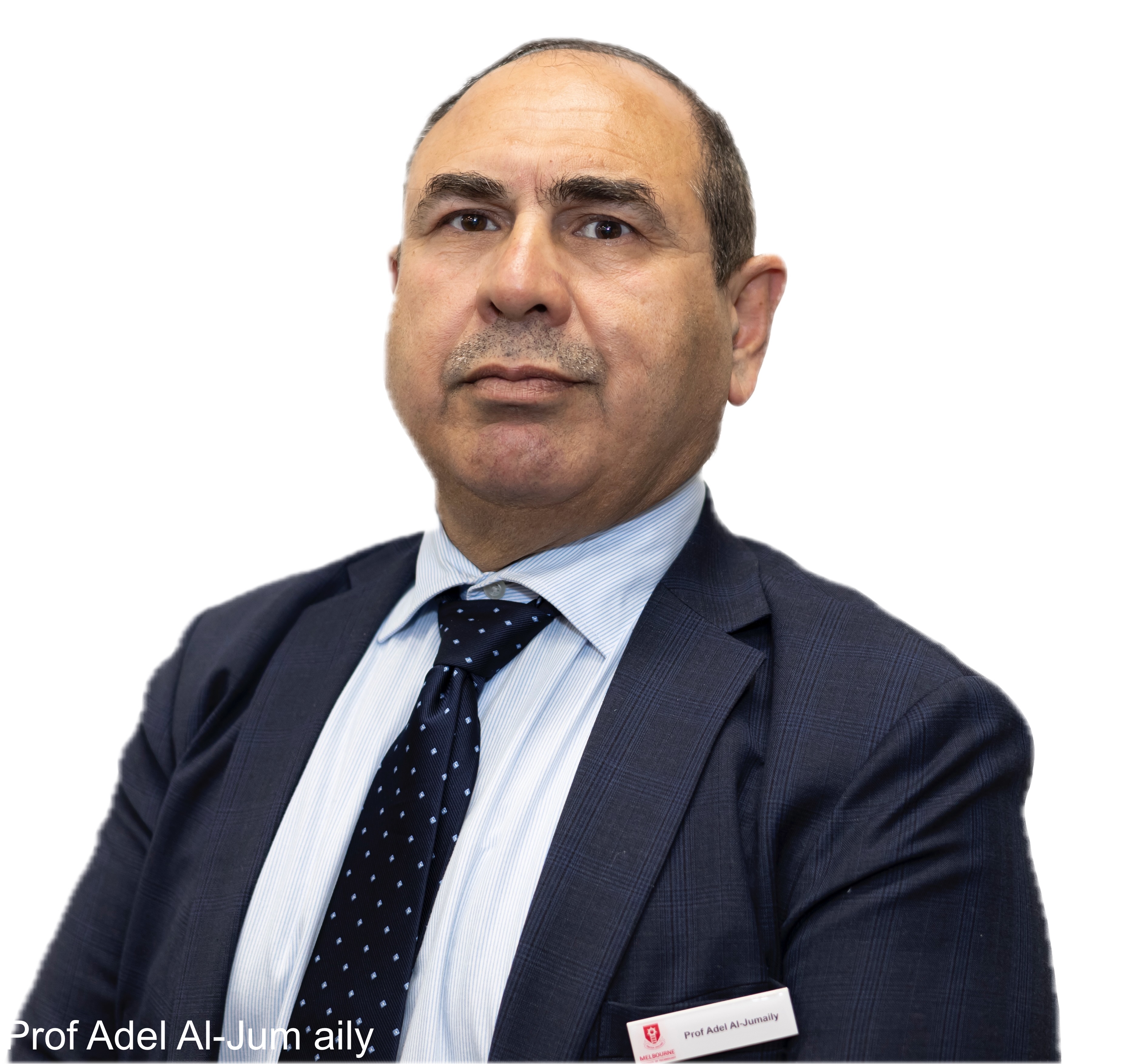
Professor Adel Al-Jumaily
Deputy Head of School IT & Engineering, Sydney and Professor in Data Analytics, Master degree of Data Analytics course coordinator
Adel Al-Jumaily is a Computational Intelligence and health technology professor, He holds the position of Deputy Head of the School IT & Engineering, Sydney, and a Professor in Data Analytics, a Professor Research Fellow at ENSTA Bretagne, France, and adjunct positions at the University of Western Australia and Fahad Bin Sultan University.
His PhD in Electrical Engineering (AI). He has more than 20 years of solid experience in the cross-disciplinary applied research area and established his international track record. He has authored over 250 peer review papers, he is a leader and researcher in Computational Intelligence, Humanized Computational Intelligence technology, Health Technology, Machine Learning, and Bio- Mechatronics Systems. Adel is an IEEE Senior Member.
FEE INFORMATION
Study now and pay later with FEE-HELP.Students studying at MIT may be eligible for FEE-HELP. FEE-HELP is a loan scheme that assists eligible fee-paying students to pay their tuition fees. An eligible person may borrow up to the FEE-HELP limit to pay tuition fees over their lifetime.
Read more about FEE-HELP or visit Study Assist.
Tuition feesFor fee information visit the tuition fee page.
Financial assistance
Youth and student allowances
For details on Youth Allowance, Austudy and ABSTUDY, visit Human Services.
FEE INFORMATION
Tuition FeesFor the latest fee information visit the Tuition Fee Page.
If you have any questions regarding fees or payment options, please contact the Admissions Team at enquiries@mit.edu.au
PREPARING YOUR APPLICATION
Before applying, make sure you:
- Meet the course entry requirements for the course you want to apply for.
- Have all your details ready—for example, your educational history, personal details, academic transcripts and award certificates.
What to include with your application?
- Evidence of completion of your previous studies that is award certificates or transcript with completion confirmed.
- Proof of identity, for example, your passport or birth certificate or citizenship.
- Evidence of English language skills (if you completed studies from a non-English speaking country).
- Proof of your permanent residency or citizenship if you were born overseas.
Certifying your academic documents
You should provide certified copies of your academic and other essential documents at the time of application.
Uploading your documents
You must upload all requested documents at the time of the application.
Learn more about the whole of the institution set here.
Contact us
Phone our friendly student recruitment team on 1800 648 669.
enquiries@mit.edu.au
Master the foundations and applications of AI and Machine Learning
The Master of Artificial Intelligence and Machine Learning has been designed to help you develop both the theoretical foundations and practical skills needed to build intelligent systems for real-world applications.
You will explore how AI technologies are developed, trained, evaluated and deployed. You will learn to work with data, build machine learning models, develop deep learning solutions, and apply AI techniques to complex business and technical challenges.
The course is designed around the real-world challenges organisations face when adopting and applying AI technologies. Through case studies, industry-based projects and a capstone project, you will gain experience solving problems using the latest AI tools, platforms and methodologies.
In addition to technical skills, you will develop professional capabilities including communication, collaboration, project management and critical thinking.
Key study areas
Explore the technologies shaping the future of AI.
Machine Learning
Develop the skills to build predictive models and intelligent systems that learn from data and improve performance over time.
Deep Learning
Explore advanced neural network architectures and learn how deep learning is used in applications such as image recognition, automation and intelligent decision-making.
Natural Language Processing and Large Language Models
Learn how computers interpret, generate and interact with human language using modern AI techniques and large language models.
Intelligent Robotics and Vision Systems
Discover how AI is applied in robotics, autonomous systems and computer vision to enable machines to perceive, analyse and respond to their environment.
Secure Systems
Understand the security, privacy and ethical considerations involved in developing and deploying AI solutions in real-world environments.
Predictive Analytics
Transform data into actionable insights using analytical techniques that support decision-making across industries.
At MIT, you never feel like just another student. We provide a welcoming environment where support, skills, and student experiences are waiting for you.
Get the support you need
MIT students consistently rate our support and services above the national average.*
Develop real-world skills
Every course includes Work-Integrated Learning, so you don't just study theory — you apply it in real-world settings.
Be part of a community
MIT students report higher interaction with teachers and peers than at many public universities.*
*Source: QILT 2024 Student Experience Survey (SES).
MIT has been granted Self-Accrediting Authority (SAA) by TEQSA — a status held by only a small number of non-university higher education providers — allowing MIT to design and maintain its own bachelor's and master's degrees.
Our degrees are accredited by leading professional bodies.
PROFESSIONAL RECOGNITION AND ACCREDITATION

The Master of Networking is accredited by the Australian Computer Society (ACS) at the Professional Level.
Develop the knowledge and skills to develop intelligent systems
The Master of Artificial Intelligence and Machine Learning has been designed to help students develop advanced knowledge and practical skills in artificial intelligence, machine learning and intelligent system design. The course structure provides a progression from foundational concepts through to advanced applications, enabling students to develop expertise in designing, developing and deploying AI solutions.
Each unit consists of 20 credit points. A full-time study load is 60 credit points per trimester.
Students complete:
- MDA691 Project Management and Research Methods
- MAI692 AI Capstone Project
The capstone project provides an opportunity to apply and extend knowledge and skills developed throughout the program.
Example Course Structure:
COURSE UNITS
Common Core Units
- MDA513 - ICT Practices
- MN404 - Fundamentals of Operating Systems and Programming
- MAI511 - Foundational Machine Learning
- MDA522 - Artificial Intelligence
- MAI521 - Neural Networks and Deep Learning
- MAI522 - Secured AI Systems
- MDA611 - Predictive Analytics
- MDA691 - Project Management and Research Methods
- MAI611 - Natural Language Processing and Large Language Models
- MAI621 - Intelligent Robotics and Vision Systems
- MAI692 - AI Capstone Project
Electives
- Data Science
- Data and Information Management
- Mathematical and Statistical Methods
- Cyber Security and Analytics
- Networked Application Management
- IoT and Sensor Networks
- Blockchain Technologies and Strategy
- Project Management for Entrepreneurs
LEARNING OUTCOMES
Graduates of the Master of Artificial Intelligence and Machine Learning have the following learning outcomes:
Graduates of the Master of Artificial Intelligence and Machine Learning will be able to:
- Evaluate and integrate state-of-the-art developments in Artificial Intelligence into professional or research contexts.
- Investigate and evaluate key AI technologies, including LLMs and apply them effectively in organisational contexts.
- Apply advanced critical thinking and analytical skills to formulate and solve complex, novel problems in artificial intelligence and machine learning, leveraging state-of-the-art methodologies and tools.
- Exhibit professional independence and leadership, exhibiting a high degree of autonomy, ethical responsibility and accountability in the design, development and deployment of intelligent systems.
- Synthesise and critically evaluate research findings in Artificial Intelligence to address complex problems.
- Adapt advanced knowledge to new and complex contexts, collaborating effectively and communicating professionally and persuasively with diverse stakeholders.
ENTRY REQUIREMENTS
To quality for entry you need to have
- Successful completion of Australian Bachelor degree or equivalent.
- For the cognate stream: An Australian bachelor degree or equivalent in Information Technology or a related discipline such as computer science, software engineering, computer engineering or networking.
- For the non-cognate stream: An Australian bachelor degree or equivalent in any other discipline.
- Institute Entry Requirement
- MIT's Admissions Transparency
- MIT Admissions Policy and Procedures
English Language Requirements
| IELTS Academic |
Overall score 6.0 (no band less than 5.5) |
|---|---|
| TOFEL ibt |
Overall score 60-78 with minimum scores: Reading 12, Listening 11, Speaking 17, Writing 20 |
| PTE Academic |
Overall score 52 with (no score less than 46) |
| Cambridge CAE |
CAE score of 169 (no band less than 162) |
ENTRY REQUIREMENTS
To quality for entry you need to have
- Successful completion of Australian Bachelor degree or equivalent.
- For the cognate stream: An Australian bachelor degree or equivalent in Information Technology or a related discipline such as computer science, software engineering, computer engineering or networking.
- For the non-cognate stream: An Australian bachelor degree or equivalent in any other discipline.
- Institute Entry Requirement
- MIT's Admissions Transparency
- MIT Admissions Policy and Procedures
English Language Requirements
IELTS Academic
Overall score 6.0
(no band less than 5.5)
TOFEL ibt
Overall score 60-78 with minimum scores: Reading 12, Listening 11, Speaking 17, Writing 20
PTE Academic
Overall score 52 with no score less than 46
Cambridge CAE
CAE score of 169 (no band less than 162)
Credit Transfer
Students can gain credit for learning already achieved. Applicants are assessed on a case-by-case basis. Learn more about credit transfer. Read more about the process.
Applications for credit transfer must be made before or during orientation and enrollment week.
We use the same tools and technologies used by AI and machine learning professionals.
Applied learning experiences
Develop practical skills through projects, case studies and applied learning experiences.
Artificial intelligence is transforming how organisations solve problems, make decisions and deliver services. Employers are seeking graduates who can combine technical expertise with critical thinking, communication and problem-solving skills.
Industry-based projects are an important part of the MAIML learning experience. Through case studies and a capstone project, you will apply AI and machine learning techniques to real-world challenges and gain experience using contemporary tools, platforms and methodologies.
You may:
- Design and develop machine learning solutions for real-world problems
- Analyse large and complex datasets to generate meaningful insights
- Build predictive models and intelligent applications
- Evaluate the ethical and practical implications of AI technologies
- Develop professional communication, teamwork and project management skills
| Healthcare
Developing predictive models to support healthcare decision-making and patient outcomes. |
Finance
Applying machine learning techniques to fraud detection, risk assessment and financial forecasting. |
| Smart Technologies
Designing intelligent systems for automation, smart environments and connected devices. |
Natural Language Processing
Developing language-based applications such as chatbots, virtual assistants and automated content analysis. |
| Computer Vision
Building image recognition and vision-based solutions for industry applications. |
Cybersecurity
Applying AI techniques to threat detection, anomaly detection and security monitoring. |
A career in artificial intelligence and machine learning could lead to roles such as:
- Machine Learning Engineer
- Artificial Intelligence Engineer
- AI Solutions Specialist
- Data Scientist
- AI Developer
- Machine Learning Analyst
- Computer Vision Engineer
- Natural Language Processing Engineer
- AI Research Assistant
- Intelligent Systems Developer
- Data and AI Consultant
- AI Product Specialist
OUR STAFF ARE LEADING INDUSTRY EXPERTS
Our school attracts some of the best minds in the fields of Engineering and Networking. Our staff are industry experts. They drive research in the field and they bring energy to the classroom.
Dr Belal Chowdhury
Course Coordinator, Bachelor of Networking

Dr Belal Chowdhury
Course Coordinator, Bachelor of Networking (Melbourne)
Belal Chowdhury has a diverse background in computer science, information systems, and management. Currently, he is the Academic Course Coordinator for IT and Business Programs at Federation University, based at Melbourne Institute of Technology, Melbourne, Australia. Belal holds a Master of Computer Science from Victoria University, Melbourne, and a PhD in Australian healthcare from La Trobe University, Melbourne. His research interests include Business Intelligence, Data Analytics, Software Development, Agile methods, and Security in Healthcare Management Systems using emerging technologies like RFID and sensors. Prior to academia, Belal worked as a Software Engineer/Developer for various IT disciplines with several multinational companies, including IBM GSA, Westinghouse Signal, and Mitek Australia, in the Engineering sector. He has extensive academic and professional experience, with his work published in international journals, book chapters, and conference papers. Belal has also examined a PhD thesis, chaired conferences and reviewed many reputable international journals.
Raza Nowrozy
Associate Professor
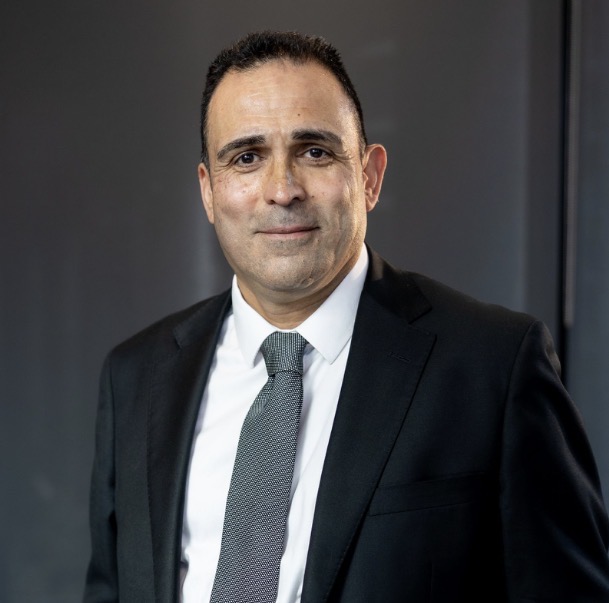
Raza Nowrozy
Associate Professor (Melbourne)
Advancing Cybersecurity Education at MIT Associate Professor Raza Nowrozy is a respected academic within the School of IT and Engineering (SITE) at MIT, where he contributes to postgraduate education, research supervision, and academic leadership.
As Acting Course Coordinator for the Master of Research, he plays a key role in guiding students through advanced research and academic development. With more than two decades of experience across academia, government, and industry, Associate Professor Nowrozy brings extensive expertise in cybersecurity, artificial intelligence governance, and digital risk management.
Associate Professor Raza Nowrozy earned his Doctor of Philosophy (PhD) from Victoria University, Australia, specialising in cybersecurity with a focus on electronic health record security and privacy. His career reflects a strong integration of research, industry practice, and teaching excellence. At MIT, he is actively involved in delivering postgraduate cybersecurity subjects and research-focused units. His teaching approach emphasises practical application, critical thinking, and alignment with current industry standards. He also supervises Master’s and Higher Degree by Research students, supporting them in developing rigorous research and contributing to scholarly publications.
Beyond teaching, Associate Professor Nowrozy contributes to curriculum development, quality assurance, and academic governance. His work ensures that programs remain aligned with industry frameworks such as ISO 27001, NIST, and the Essential Eight, preparing graduates for real-world cybersecurity challenges. Through his commitment to research, innovation, and student success, Associate Professor Nowrozy continues to make a significant contribution to the advancement of cybersecurity education and practice.
FEE INFORMATION
Study now and pay later with FEE-HELP.Students studying at MIT may be eligible for FEE-HELP. FEE-HELP is a loan scheme that assists eligible fee-paying students to pay their tuition fees. An eligible person may borrow up to the FEE-HELP limit to pay tuition fees over their lifetime.
Read more about FEE-HELP or visit Study Assist.
Tuition feesFor fee information visit the tuition fee page.
Financial assistance
Youth and student allowances
For details on Youth Allowance, Austudy and ABSTUDY, visit Human Services.
FEE INFORMATION
Tuition FeesFor the latest fee information visit the Tuition Fee Page.
If you have any questions regarding fees or payment options, please contact the Admissions Team at enquiries@mit.edu.au
PREPARING YOUR APPLICATION
Before applying, make sure you:
- Meet the course entry requirements for the course you want to apply for.
- Have all your details ready—for example, your educational history, personal details, academic transcripts and award certificates.
What to include with your application?
- Evidence of completion of your previous studies that is award certificates or transcript with completion confirmed.
- Proof of identity, for example, your passport or birth certificate or citizenship.
- Evidence of English language skills (if you completed studies from a non-English speaking country).
- Proof of your permanent residency or citizenship if you were born overseas.
Certifying your academic documents
You should provide certified copies of your academic and other essential documents at the time of application.
Uploading your documents
You must upload all requested documents at the time of the application.
Learn more about the whole of the institution set here.
Contact us
Phone our friendly student recruitment team on 1800 648 669.
enquiries@mit.edu.au
WE CARE ABOUT YOUR FUTURE
At MIT you’re more than a number. Our teachers know students by name. And our teaching methods support and challenge you to reach your potential.
Our care goes beyond the classroom. We ensure students have the support and skills they need to succeed in life and study.
We understand that choosing a course can be daunting at times. Our friendly student support service is there to answer your questions.
Let’s get started. Call us today.
At MIT you’ll experience great teaching in a supportive environment. And you’ll graduate with the skills you need to succeed.
Call our friendly student services team today to discuss your learning journey on +61 3 8600 6700.